
How Employers Can Help Their Workers Become Homeowners
Introduction
For millions of Nigerian workers, owning a home remains one of the most important long-term financial goals. Yet for many employees, the journey from receiving a monthly salary to owning a home can feel out of reach. The challenge is not necessarily a lack of ambition because survey results show that many workers want to own homes but are unsure how to navigate the financing options available to them. They may not know whether they qualify for a mortgage, how much they can afford to borrow, what documents they need, or which institution to approach.
This is where employers can make a meaningful difference.
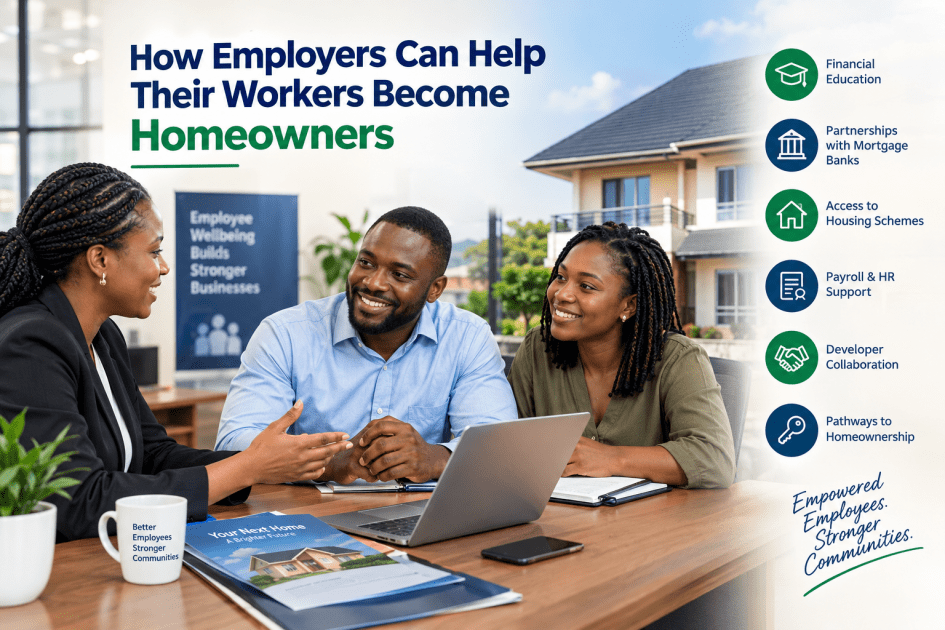
Nigerian employers already play an important role in their employees' financial lives. Through salaries, payroll systems, Human Resources departments and employee-benefit programmes, employers are well positioned to help workers better understand and access housing finance. They do not need to become mortgage lenders, instead, they can become enablers of homeownership by connecting employees with the right information, institutions, as well as opportunities.
Why Homeownership Should Be Part of the Workplace Conversation
For many Nigerian employees, housing is one of the largest monthly expenses, in major cities like Lagos, Abuja, Port Harcourt and Enugu, housing costs can take a substantial portion of household income. Employees may spend years paying rent while postponing plans to purchase or build a home.
For employers, this has implications beyond the housing market; an employee's financial wellbeing can affect their overall sense of security and ability to plan for the future. Employers that support financial wellness therefore have an opportunity to include housing and homeownership within their broader employee-support programmes. Homeownership does not have to be presented as an immediate objective for every employee but workers can be encouraged to understand the options available to them and begin planning early.
Employers Do Not Have to Finance the House
One of the most important points for employers to understand is that supporting homeownership does not necessarily mean providing housing loans directly to employees.
There is already an established housing-finance ecosystem involving:
- Primary Mortgage Banks (PMBs);
- The Federal Mortgage Bank of Nigeria (FMBN);
- The National Housing Fund (NHF);
- Pension-related housing-finance initiatives;
- Property developers;
- Insurance providers;
- Financial institutions; and
- Other participants in the Nigerian housing and mortgage market.
The employer's role can be to help employees navigate this ecosystem. For example, an organisation can partner with a PMB to provide mortgage education, affordability assessments and information sessions for employees. The mortgage institution evaluates the employee's application according to its lending requirements, while the employer helps make the process more accessible.
1. Bring Mortgage Education Into the Workplace
Many Nigerian workers have heard the word "mortgage" but do not fully understand what it involves.
Some may assume that mortgages are only available to high-income earners. Others may believe they need to have enough cash to purchase a house before approaching a mortgage institution. These misconceptions can prevent otherwise eligible employees from exploring their options.
Employers can address this through workplace financial-education programmes.
An HR department could, for example, invite a PMB or other relevant housing-finance professional to conduct a session. The goal should be education, not sales.
2. Build Partnerships With Primary Mortgage Banks
Rather than leaving individual employees to navigate the mortgage market on their own, an organisation can create a structured channel through which workers can obtain information and begin the mortgage process.
An employer–PMB partnership could include; Mortgage-awareness sessions; Employee mortgage clinics; Affordability assessments; Mortgage prequalification; Application guidance; Property-financing information; Dedicated communication channels; and Periodic homeownership seminars.
For large employers, these programmes can potentially reach hundreds or thousands of workers. However, this is particularly valuable for organisations with substantial numbers of salaried employees whose income can be documented through formal payroll systems.
3. Help Employees Understand What They Can Afford
A common mistake among prospective homeowners is to begin with the property rather than the financing, an employee may find a house they like and only afterwards ask: "Can I afford this?"
Employees should understand their income, existing financial commitments, savings, potential equity contribution and realistic monthly repayment capacity before committing to a property. Meanwhile, employers can incorporate this education into financial-wellness programmes. This is especially important in Nigeria, where employees may have other financial responsibilities, including family obligations, school fees, transportation, existing loans and rent.
4. Explore Pension-Backed Housing Opportunities
Another area employers can bring to employees' attention is the potential use of pension-related housing-finance opportunities where applicable. Nigeria's evolving pension and housing-finance framework has created opportunities for eligible contributors to use part of their retirement savings under approved conditions toward residential mortgage financing. For employees who qualify, understanding how such programmes work can change the conversation around the initial financial contribution required to purchase a home.
Conclusion (Why This Matters to Nigeria's Housing Market)
Nigeria's housing challenge cannot be addressed simply by building more houses, there must also be a financing system that enables people to purchase those houses and this is where employers can play an important role. Nigeria has millions of workers who earn regular incomes but may not fully understand how to convert that income into long-term housing finance. Employers can help close that information and access gap.
When employers connect workers with mortgage institutions, developers create mortgage-ready housing, and financial institutions provide appropriate long-term financing, the result can be a stronger connection between employment, finance and homeownership.